



What 38,000 Australian Families Taught Us About Tween Skin
It started at a Sunday lunch. My daughter was already experiencing skin changes at the age of 7 and the question went around the table, what do you actually put on a seven-year-old's face? Not one of us had a good answer. Not the mums, not the skin therapists grandparents, nobody. Everything on the shelf was either made for babies or directed at women worried about wrinkles.
That gap is the reason this brand exists. Seven years on, we've heard from a community of 74,000 families through reviews, messages, and the questions that land in our inbox most weeks. This is what they've taught us about the skin of a 7-to-14-year-old, and where most of us go wrong with it.
Here's the short version, if you only read one line: tween skin needs less than you think, started earlier than you'd expect, and the hardest part isn't the products, it's getting a kid to actually use them.
When does tween skin actually start changing?
Earlier than most parents plan for. The biggest single thing we hear is surprise at the age, parents bracing for "teenage skin" at thirteen, then noticing changes at eight or nine.
Biologically, that tracks. In the lead-up to puberty, the skin's oil glands start waking up, usually first around the nose, forehead and chin. Pores can look more obvious, and the smooth "baby skin" texture starts to shift. It's a normal developmental change, not a problem to fix.
"46% of our customers who were polled, told us the average age their child's skin started changing was between 9 and 10."
What this means for parents: the window to help a child build a simple, calm habit opens sooner than the marketing around "teen skincare" suggests.
What's the number one thing parents get wrong?
Doing too much. By a wide margin, the pattern we see is good intentions turning into a bathroom shelf full of products a tween doesn't need.
Some of that is the TikTok effect, kids asking for ten-step routines and acid serums built for adults. Australian dermatologists have been flagging the same thing: the most common mistake at this age is over-using products, not under-using them.
The families who tell us things are going well almost always describe the opposite: a short, boring, repeatable routine. Wash, moisturise, sunscreen. That's the whole job for most kids this age.
"67% of parents polled said that their children first heard about skincare from Tik Tok / social media and only 25% came from the parent themselves."
What do tweens actually want from their skincare?
This was the most useful thing we learned, and it has almost nothing to do with ingredients.
Tweens want autonomy and a bit of fun. The products that get used are the ones a kid feels are theirs, something they chose, that smells good, that's easy to use without help. The single most common reason a routine sticks, in the messages we get, is simply that the child likes it enough to reach for it on their own.
That reframes the parent's job. It's less "find the most clinically perfect formula" and more "find the one she'll actually pick up." A product that sits unused is the wrong product, however good it is on paper.
The most-mentioned reason parents said a routine "stuck" was because of the scent and that it was theirs"
What does tween skin actually need?
Three things, and that's it for most kids:
- A cleanser to wash off the oil, sunscreen and grime from the day, morning and night.
- A moisturiser to keep skin comfortable.
- Sunscreen the one non-negotiable, every day.
No actives, no exfoliating acids, no anti-ageing anything. Tween skin isn't adult skin scaled down, it's skin that's still figuring out how to be skin, and the kindest thing you can do is keep the routine short while the habit forms.
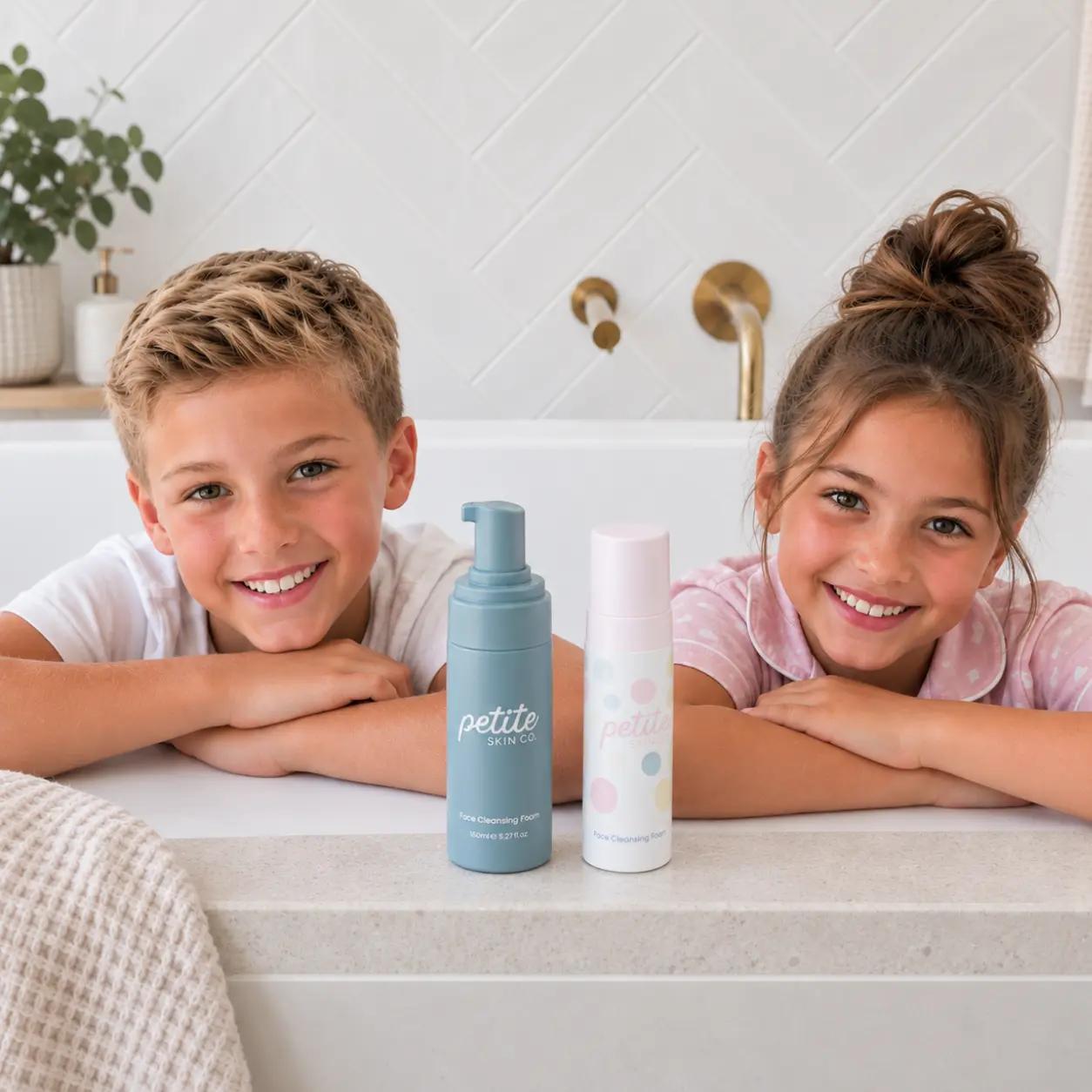
or exactly what to reach for at each age, from 7 through 14, see our Skincare by Age guide. If you want a starting point, our foaming face cleansers for tweens were built around exactly this — one pump, the right amount, ages 7 to 14.
The pattern that surprised us most"67% of parents questioned, told us the hardest part was choosing the right product rather than actually getting them to use it"
This is the kind of insight that doesn't show up in a dermatologist's clinic, because it's not about skin, it's about a ten-year-old at a bathroom sink at 7am. It's the part of tween skincare nobody else is measuring, and it's the part that decides whether any of it works.
About this data
This data was drawn from a survey of 38,000 parents in our instagram community in May 2026 and an analysis of 700+ verified customer reviews.
Petite Skin Co. makes natural skincare formulated for kids and tweens aged 7–14, in Australia. We're a Clean + Conscious Awards finalist and have 700+ verified reviews from families across the country.
Want a simple, no-fuss starting point for your tween? Explore our first skincare routine kit.


