


The Kid Who Refuses to Moisturise Because Their Skin Is “Already Oily Enough”
Give a tween a bottle of moisturiser and tell them their skin is oily, and you’ll get the same reaction most times: why would I add more? It’s not a bad instinct, it’s just wrong. Skin that’s stripped of moisture tends to produce more oil to compensate, not less. So skipping the moisturiser because skin already looks oily can be the exact thing keeping it oily.
Where a lot of oily-skin advice goes wrong is assuming the fix is always a specific kind of product - oil-free, gel, mattifying. Sometimes it’s less about the formula and more about how much goes on, and where.
Less is the actual lever
- A pea-sized amount is enough for the whole face - oily skin needs coverage, not thickness. More product doesn’t mean more protection, it just means more sitting on top of skin that’s already producing plenty of its own
- Go lighter on the T-zone, a little more on drier areas - most tween skin isn’t uniformly oily; forehead, nose, and chin often need less moisturiser than cheeks and jaw
- Pat it in rather than rubbing it in - patting spreads a thin layer further; rubbing tends to concentrate product in fewer spots
- Give it a minute to sink in before sunscreen goes on top - layering wet-on-wet is often what makes a routine feel greasy, not the moisturiser itself
A simple routine
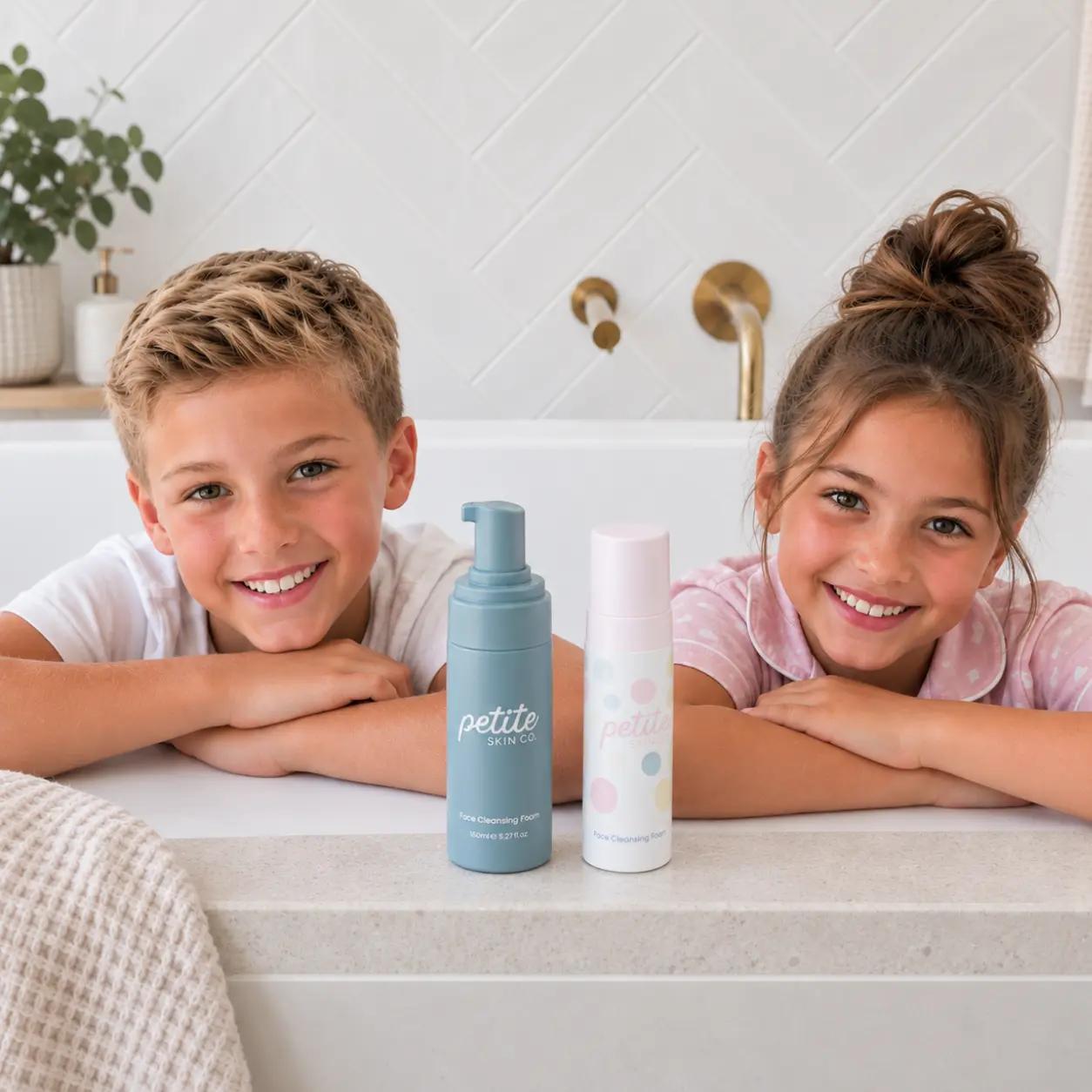
- Face Cleansing Foam, morning and evening - oily skin tends to tolerate (and benefit from) twice-daily cleansing better than drier skin types
- Face Moisturiser, a thin layer patted onto damp skin, both times
- Sunscreen in the morning, applied after the moisturiser’s had a minute to absorb
A straight answer on the ingredients
Our Face Moisturiser is a natural, plant-oil-based formula, it includes safflower and camellia seed oil, shea butter, and coconut oil, alongside aloe and glycerin for hydration. It’s genuinely good for nourishing skin, and it’s not marketed as an oil-free or mattifying product, because it isn’t one.
If your tween’s skin is very acne-prone or breaks out easily, coconut oil in particular is worth watching, it’s a heavier, more occlusive oil, and some skin handles it better than others. A thin layer, applied as above, is the sensible starting point. If breakouts increase over a couple of weeks of use, that’s useful information, and easing off the amount (or the frequency) is a reasonable next step before assuming the product’s wrong entirely.
What actually makes oily skin worse
- Skipping moisturiser entirely - still the most common mistake
- Washing more than twice a day, or scrubbing - strips the skin, which is exactly what triggers rebound oil
- Piling on product - more isn’t better, regardless of which moisturiser you’re using
- Hot water - strips oil fast enough that skin overcorrects almost immediately
FAQ
Won’t moisturiser just make oily skin more oily?
Not inherently - skipping it is more likely to do that, since stripped skin tends to overproduce oil to compensate. Amount matters more than chasing a specific formula type: a thin layer, applied consistently, does the job without adding to shine.
Does oily skin in tweens mean acne is coming?
Increased oil is common through puberty as hormones shift - it doesn’t automatically mean acne’s on the way, but a steady routine (cleanse, moisturise, sunscreen) is a sensible baseline regardless.
Should the routine change as they get older?
Oil production tends to shift across the teen years, so it’s worth reassessing amount and frequency every few months rather than assuming what worked at 11 still fits at 16.
Does diet make a difference?
It’s genuinely individual, and not something a skincare routine can account for. If oiliness or breakouts are a real concern, that’s a conversation for a GP alongside whatever’s happening topically.


